
Free healthcare: We need to protect Malta’s best asset
This column first appeared in Malta Today
The recent news that sick tourists were coming to Malta to take advantage of our free health care is alarming. The head of Malta’s Infectious Disease Prevention and Control Unit Tanya Melillo told a conference that there have been 100 such cases over the last two years.
“People – mainly from Latin American countries – are coming to Malta on holiday knowing they have a disease, thinking that they can be treated for free, because of our free healthcare system,” she said. Although they would not be eligible for free healthcare, she said that if treatment is needed, then it will be provided. But this has led to a growing number of unpaid medical bills, amounting to over €13 million. To bypass the fees, some take low-paying jobs so that they can pay national insurance that would eventually make them eligible for free healthcare, she added.
What was not clear in this report is how they can work if they came here on a tourist visa? And aren’t TCNs obliged to undergo medical tests to qualify for work/residency permits? So who is employing people who come here who are already suffering from an illness? Many questions need to be answered.
As things turned out, a few days after that report, I ended up going through the system myself after I fractured my wrist and required an operation, which has confirmed to me once again just how truly exceptional our healthcare is.
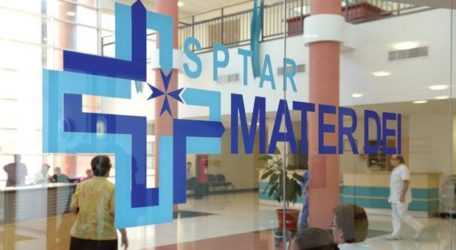
From the time I went to the Mosta health clinic from where I was directed to Mater Dei because of the nature of my injury, the care and attention were second to none.
Did I have to wait for hours? Well, yes, of course, this is the public heath service which means it is open to everyone. At the health clinic alone, which has a large catchment area, I counted at least 20 people who were there for blood tests which, from what I could gather, is quite a common practice (rather than, say, going privately to their GP). It would obviously relieve the clinics if less people relied on getting their blood work done there but for those on a low income, as we say in Maltese ‘sewwa jagħmlu’ (and so they should). That is why we pay taxes after all.
Others like myself were there for other reasons, and as it happened we had to wait for the new shift of doctors to take over but, after that, the process was organised and relatively smooth.
Waiting rooms, even when one is on painkillers, are always a source of fascination. Those who are glum and silent, those who strike up conversations with anyone, those who are grumpy, huffing and puffing every time their number doesn’t come up on the screen. It feels like the NHS version of being at the bank…or the cheese counter. The very patient staff who were badgered continuously “when is it my turn, what about ME??” had to repeatedly explain that when your number is called depends on what you were there for. It was like a microcosm of the wide spectrum of human nature which once again confirms that there is a serious virus out there more contagious than the flu, and it’s called entitlement. Obviously, when you are ill or injured, it is your own pain which concerns you the most but when everyone else in the room also thinks their case should take precedence, it does not bode well.
The experience also gave me a close up look at the plight of Third Country Nationals of which there were several. Locals exchanged looks between them, some muttering under their breath about “dawn il-barranin’’, while others were more sympathetic and understanding “allura, they work and pay tax here too”. I counted at least four who were asked to come back again because they did not bring the necessary paperwork, or who were asked to pay because they have not been working in Malta for one full year. Is it cruel to turn sick, poorly paid people away and not allow them to receive free heath care? My heart says yes, but rationally I know there has to be some criteria otherwise it will really be a disaster for an already over-burdened system.
There were also carers (all foreign nationals) with Maltese elderly residents from one of the nearby care homes. Gentle, patient, never complaining and acquiescent almost to a fault, even in the face of outright rudeness by some, these carers are doing jobs very few would do. In a society where family members are becoming more conspicuous by their absence, it is these carers who are taking on the responsibility of bring there when an elderly person needs to be accompanied to the doctor.
Similarly at Mater Dei, as I went through Emergency and waited to be admitted, it was like watching the reality of today’s Malta unfold before my eyes. A smorgasbord of nurses, doctors, carers, ambulance personnel, cleaners and the hundred other roles required to run a national hospital where every emergency in the country is channelled through one hub. No matter which country they came from, everyone was dedicated and professional, working calmly amidst what to me seemed like a chaos of humanity: bodies broken, weakened and damaged by accidents, illness or old age, all coming through relentlessly, requiring treatment.
So many elderly people came through those doors with various problems, either from a fall, or a health condition, bringing into sharp focus once again our ageing population, whose need for medical attention will inevitably increase as they get older. Worried, anxious relatives clutched personal belongings grabbed in a hurry for the ambulance ride, bewildered and frightened, the anguish etched deep in their face, feeling helpless, fearing the worst. Everything else ceases to matter, you just pray that whatever is wrong can be fixed.
Suddenly, there was a sudden perceptible shift in the atmosphere as police officers and soldiers walked in, escorting young men on stretchers shivering from hypothermia – these, I learned, were immigrants from North Africa who had landed that day at the Bugibba jetty. Again, everyone sprung into action, giving these men the treatment they needed. Meanwhile the mutterings within earshot around me were inevitable, “kif sirna, qegħdin sew” (look how we’ve ended up) with only the occasional “imsieken” (poor things).
At the risk of sounding like a cliche’, my own experience reiterates my conviction that we don’t know how good we have it here with our health care. Even with a minor operation like mine, when you add up three nights at the hospital, followed by orthopaedic surgery under general anesthetic, it could easily run into thousands in countries where there is no national health service. I don’t think people realise what it must feel like to go to a hospital and be asked to fill out paperwork to confirm that you are covered by insurance before you are even seen.
I definitely agree with the suggestion once proposed in 2015 by the President of the Malta Chamber of Commerce, Enterprise and Industry, Anton Borg, that everybody using free healthcare in Malta should get a bill outlining how much it has cost the country, without the patient actually being made to pay for it. Awareness of how much health care costs in real terms might, just might, make us more appreciative that the money does not just drop out of the sky. Yes, we are paying for it from our taxes and N. I, but can you imagine if we paid taxes but also had to pay for health insurance which does not necessarily cover everything?
This is why there must be a more rigorous tightening up of the loopholes which have led to people who are sick deliberately travelling here to take advantage of the situation. With a system which is reaching breaking point, Malta just cannot end up becoming the Mediterranean’s free healthcare solution for everyone.
- December 30, 2025 No comments Posted in: Opinion column Tags: free healthcare
Related posts
-

What everyone with elderly parents should know March 31, 2026 | No comments
It comes unexpectedly that day when the roles are reversed and you find yourself the adult and it is your parent/s who need to be taken care of in the same way they took care of you as a child. The circle of life often creeps up on you without warning, leaving you reeling not only at the realisation of their inevitable mortality but of yours as well.
-

Who wants to be a millionaire? March 24, 2026 | No comments
A report in Malta Today told us this week that at least 10% of households in Malta can be classified as millionaires, according to the latest results of the Household Finance and Consumption Survey carried out by the Central Bank.
-

What kind of father tries to kill his own children? March 18, 2026 | No comments
At 10pm in the evening of 7 March, while many of us were enjoying our Saturday evening, a little 10-year-old girl ran out on the Coast Road, asking people for help.
-

The good, the bad and the electoral manoeuvres March 11, 2026 | No comments
No country or government is all good or all bad, and usually there is a sprinkling of everything (except perhaps for Trump’s America for which I cannot think of a single redeeming feature).
