
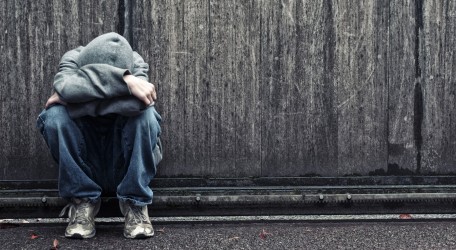
We rarely used to see homeless people, so what happened?
This column first appeared in Malta Today
Today the majority of us will sit down to to a delicious Easter lunch at tables groaning with food, surrounded by family and friends, in our warm comfortable homes, or else at a restaurant because we can afford to spend a couple of hundred Euro to eat out.
The children will receive so many figolli and chocolate Easter eggs from relatives that they will probably not be able to eat them all. Churches will be packed and crowds will throng to the annual procession of L-Irxoxt (the Risen Christ) because for this one day, even those who are not practicing Catholics will feel that nostalgic pull which takes them back to their roots as they remember their childhoods, steeped in this devout tradition.
And Facebook and Instagram will be replete with photos of happy families.
In stark contrast to this picture perfect portrait of privileged lives, last week’s edition of Popolin made us keenly aware of another world which exists on this island, of which few of us are actually aware because it is not on our radar.
It is a world of drop-in centres, soup kitchens, and a place to have a shower and wash your clothes from the grime of the streets.
The documentary peeled away the multi-faceted layers of Maltese society and revealed the underbelly which exists on the periphery of all these new flats which will be rented out at stupid prices which no one on an average salary can afford. What a paradox to discuss homelessness within the context of a country which has a booming economy, zero unemployment and keeps importing a foreign workforce because it cannot find enough locals to do the jobs which are available.
Popolin provided a keyhole glimpse into another Malta. The homeless are people with a myriad of issues: ex-convicts who served their sentence but have nowhere to go. Those with mental health issues, drug problems, gambling, debts and broken marriages. Those who lost their job due to an injury and could no longer afford to pay rent. Former businessmen and professionals who became involved in illegal activity. With each interview, the recurring theme was loss: they have lost their home, their job, their children, their entire family. They have lost everything.
As was pointed out, from this side of the fence it is easy to be judgemental and not have any compassion for homeless people, saying they brought it on themselves because of substance abuse or other bad decisions. It is also easy to sweep them all into one category: all foreigners, all men, all addicts, but the reality is very different. The homeless are divided into three categories:
- Primary homeless – sleeping rough, or under a tent or in a car
- Secondary homeless – couch-surfing, sleeping at friends or always changing their residence
- Tertiary homeless – they have a place but are always changing because they have no security of tenure and can be evicted at any point, or else where they are living does not have minimum living standards such as a private toilet.
In a conference held last year by YMCA, it classified 335 individuals as at risk of homelessness, 185 as roofless, 23 as couch-surfing, and 27 as unspecified. These figures were reinforced by related data from other agencies. YMCA Malta assisted 450 people in 2024, and nearly 300 cases were recorded in the first six months of 2025 alone, with 180 being provided shelter.
75% are men, mostly due to mental health issues, substance abuse or who were evicted for not paying rent. Foreign nationals make up 67% of homeless people in Malta.
Between 35 – 50 homeless individuals every day use the YMCA drop-in centre in Hamrun which provides them with their basic necessities while they are waiting to be allocated a place and programme in one of their shelters.
From the smug comfort of our homes which we own and for which we can afford to pay the mortgage because we have a steady income, we cannot begin to fathom what it feels like to hit rock bottom. The indignity and humiliation of relying on charity, waiting until 9am for YMCA to open to have breakfast or lining up at the soup kitchen with strangers, or resorting to begging. Women whose children have been taken away from them because they have served prison sentences, or are addicts and have been unable to break free from their habit. Sleeping in abandoned factories surrounded by rats, or on benches, or in a bus shelter, summer and winter. One man described how he used to walk all night just to keep warm.
It is a Catch 22 situation of first needing a place to live and then being able to apply for a job because without a fixed address you cannot do anything.
During the programme it was made clear that there is a distinct link between mental health, unemployment and not having a home, especially with no close family relationships as a support system. Post-homelessness leads to even more problems, physical health issues and an increased mental health spiral, which can result in clinical depression or suicide attempts. Desperation leads some people to resort to crime or usury to pay their bills, creating an even more vicious circle. Just imagine for a minute not having a home to go back to at the end of the day… it would feel traumatic. Being homeless robs us of our identity and can crush our very soul.
How did we get here?
As was evident from this programme, the problem of homelessness is growing. What we have to examine is how we got here, and whether we are failing as a society to take care of our own.
The out-of-control rents which some landlords are demanding are contributing to this problem and that is a fact. So unless there is a serious tightening up of the loopholes in rent regulation, we are bound to see more people being evicted. The loss of income is a major factor, which then inevitably leads to the loss of one’s home either because one cannot pay the mortgage or the rent. If couples are in over their head with the loan they have taken out, it only takes one of them to lose their job to plunge them into financial crisis. Keeping up with the Joneses no longer seems so attractive when one is facing bankruptcy. As a culture we need to examine what we really mean by #relationshipgoals, and whether this pressure to live up to social media expectations has created a monster which is swallowing us up and spitting us out.
There are also very grave societal issues which need to be addressed. There are usually a chain of events which lead to someone ending up without a place to live, but in the past, because we all had a healthy network of family and friends these type of scary scenarios were largely avoided: people moved back in with their parents, and sometimes even siblings or extended family were willing to offer temporary accommodation until the person got back on their feet. But these days that safety net is being ripped apart and is full of holes, as more families become fractured because of divorce and what is worse, family members who are permanently estranged. (That is why foreigners living here are more susceptible to ending up on the street, because many do not have any one to fall back on when things go wrong.)
Another crucial factor is upbringing: if you have been brought up in family dysfunction, chaos and instability the triggers of not being able to cope are already there. Being raised in such an environment often means one is unable to regulate one’s emotions. The constant threat of poverty hanging over their head (which is often generational) then continues to further plunge these people into possible homelessness.
There are other factors, of course, such as one’s strength of character. After all, there are many people who have come up against very serious problems at one point or another in their lives, but have managed to power through with grit and determination and come out the other end with head held high. The reason some of us make it and others don’t is hard to pinpoint. Why do some persevere against all odds while others crumble and are defeated? That is, indeed, the question.
Of course, there is the other side of the coin: if someone receives their benefit cheque and still spends it on drugs it is difficult to feel sympathy. Those with a drug abuse problem are often not accepted at shelters, which is another problem. As pointed out during Popolin, having a specific shelter which takes in drug addicts might be the first step for them to enter a programme because as long as they are on the streets they will keep falling back into their addiction.
You will also have those few who, despite being helped, still revert back to their comfort zone, returning to the familiarity of living on the streets, because they do not want structure and discipline or being told what to do.
But for those who are willing to be helped, who just need to take that first step to get back on to a sure footing, there is help out there, and an impressive amount of volunteers who are dedicating their lives to alleviating the problem of homelessness. Undoubtedly, more can be done, and this is what the government needs to spend our taxes on because it has a social responsibility to care for all its citizens, especially those who are forgotten, barely existing on the fringes of society.
When I see public money being earmarked and squandered on fancy projects, I know where I would prefer that money to be spent on: more outreach programmes and more shelters, because no one should be out there sleeping on a bench, exposed to the elements or squatting in derelict buildings among scurrying rats.
- April 5, 2026 No comments Posted in: Opinion column Tags: Easter, YMCA, homeless
Related posts
-

This country is tired of fighting for its rights October 11, 2026 | No comments
Occasionally, a news story which has dominated the headlines can give me enough material to write about a new topic, but there are times, like today, when all I feel is fatigue and ennui. The same problems hover over us, weekly, monthly, yearly and yet the government seems to have been consumed by inertia or indifference or both; unable or unwilling to tackle what really matters to the average person.
-

The money has to come from somewhere October 4, 2026 | No comments
This week, Finance Minister Clyde Caruana went on record as saying he does not want to be the person who “kills this country’s economy” and that is why energy subsidies will not be removed under his watch. Fair enough – I don’t think any rational person wishes Malta to collapse either because we will all suffer as a result.
-

A disrupted conference, pointless hindsight and a slice of pizza September 27, 2026 | No comments
It is clear that we need more than just street protests to shake this government from its complacency and its smug assumption that people will simply forget about the blatant corruption and move on. A protest will be “tolerated”, and afterwards those who made the effort to show up will go home and, no matter how angry they still are, they inevitably have to resume their lives.
-

This is not about which side wins, it’s about what Malta has lost September 20, 2026 | No comments
When people put a laughing emoji or a derogatory comment every time the Daphne Caruana Galizia murder is mentioned, I take a look at their profile.
